

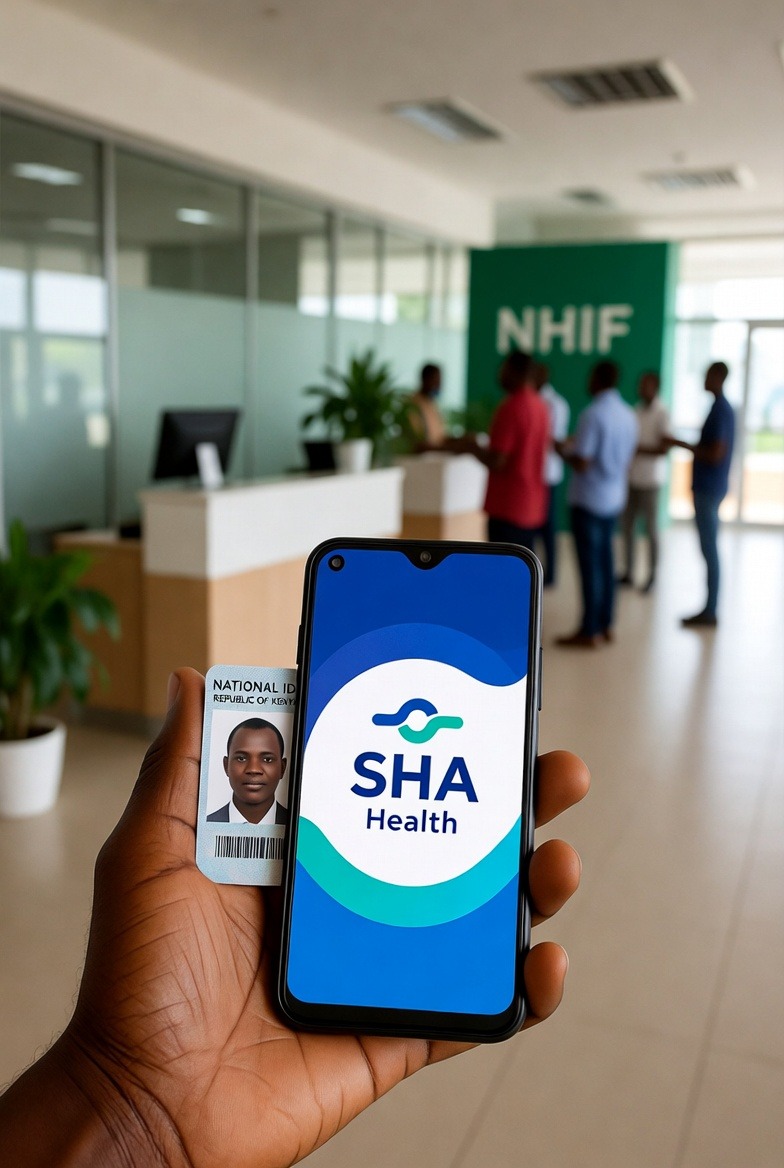
More than a year into the transition, Healthy Kenya breaks down what SHA is, how it works, and what it means for you and your family.
Why Was NHIF Replaced?NHIF had long been criticised for opacity, inefficiency, and an inability to deliver on the promise of Universal Health Coverage (UHC). Audits revealed systemic mismanagement of funds, irregular payments to hospitals, and a benefits structure that failed to keep up with actual healthcare costs. Many Kenyans paid their monthly contributions faithfully but found themselves unable to access care – or faced with enormous out-of-pocket bills despite being ‘insured.’
The Social Health Insurance Act of 2023, passed as part of President William Ruto’s UHC agenda, created three new bodies to replace NHIF: the Social Health Authority (SHA), the Emergency, Chronic and Critical Illness Fund (ECCIF), and the Primary Healthcare Fund. Together, these were designed to create a more comprehensive, accountable, and means-tested health financing system.
“SHA is designed to cover every Kenyan – from the formal employed to the informal worker, the unemployed, and the most vulnerable.” How Contributions Work
This is where SHA differs most fundamentally from NHIF. Under the old system, most formal employees paid a flat-rate monthly contribution regardless of salary. SHA moves to an income-based model:
- Salaried employees contribute 2.75% of their gross monthly salary, matched by an equivalent employer contribution.
- Self-employed and informal workers can contribute based on their declared income or opt into a subsidized rate.
- Vulnerable populations – including those below the poverty line – are covered through government-funded contributions under the Primary Healthcare Fund.
The shift to income-proportional contributions is widely regarded as a more equitable model, though it has raised concerns among middle-income earners, whose contributions increase significantly compared to the old flat rates.
What Is Covered?SHA’s coverage is broader than NHIF’s in several important respects. Key benefits include:
- Outpatient care at accredited facilities, including consultations, diagnostics, and medications.
- Inpatient care, including surgical procedures, ICU admissions, and specialist services.
- Maternal and child health services – antenatal care, delivery, postnatal care, and paediatric consultations.
- Mental health services, including psychiatric outpatient consultations and psychotherapy – a significant expansion from NHIF.
- Chronic disease management for conditions such as diabetes, hypertension, cancer, and HIV/AIDS, channelled through the ECCIF.
- Dental and optical care with defined limits.
Notably, SHA has expanded the list of accredited facilities, including many Level 2 and Level 3 facilities (health centres and sub-district hospitals) that were previously excluded from NHIF’s network.
The SHA Card and Digital RegistrationRegistration under SHA is done through the SHA portal (sha.go.ke) or via Huduma Centres. Upon registration, each member receives a SHA number linked to their national ID and generates a digital SHA card accessible via a mobile phone. The card is used to access services at accredited facilities.
One of the notable improvements over NHIF is the push toward real-time verification at the point of care, reducing the fraud and ghosting that bedevilled the previous system. Facilities are supposed to verify eligibility digitally before processing claims. Teething Problems: What Kenyans Are Experiencing
Despite the ambitious design, the SHA rollout has not been without significant challenges. Hospitals – particularly county hospitals – have reported delays in claim reimbursements, which in several instances led to facilities informally suspending SHA services. Patients have found themselves turned away or asked to pay out of pocket while their SHA status was being verified.
Registration gaps persist, particularly in rural and informal settlement areas where digital literacy and access remain barriers. There have also been reports of confusion at the facility level, with staff unfamiliar with the new claims processing system.
The government has acknowledged these challenges and has committed to accelerated reimbursements and a nationwide public education campaign. As of early 2026, the system is described as operational but still maturing. What You Should Do Right Now
Regardless of the ongoing teething problems, every Kenyan should take these steps:
Register or re-register on SHA at sha.go.ke or through a Huduma Centre. Do not assume your old NHIF registration automatically transfers – confirm your status.
Confirm your contributions are being remitted if you are formally employed. Your employer is legally obligated to remit contributions monthly.
Know your nearest SHA-accredited facility. The full list is available on the SHA website.
If you experience a claim rejection or access problem, escalate through the SHA complaints mechanism – do not simply pay out of pocket without first attempting to resolve the issue. The Bottom Line
SHA represents the most significant restructuring of Kenya’s public health financing in generations. Its design is more equitable and more comprehensive than NHIF’s. But a better design only delivers if the implementation catches up. Kenyans should engage with the system, report problems, and hold the authority accountable – because UHC will only become real if citizens demand it.