

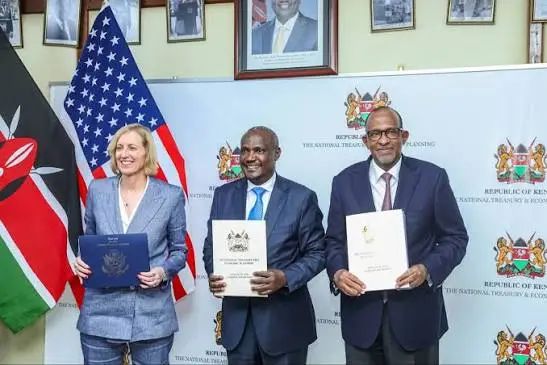
Kenya and the United States have officially launched the implementation phase of a five-year Health Cooperation Framework following the signing of a Strategic Objective Grant Agreement (SOAG). The partnership is designed to strengthen Kenya’s healthcare system through sustained investments in disease control, health system resilience, digital health and long-term institutional capacity.
Under the agreement, the United States plans to provide up to US$1.6 billion in health support over the next five years, while Kenya has committed approximately US$850 million in additional domestic health financing. Together, the commitments amount to an estimated US$2.45 billion, reflecting a shared commitment to improving healthcare delivery and advancing sustainable health financing.
The framework aligns U.S. assistance with Kenya’s national health priorities, including HIV, tuberculosis, malaria, maternal and child health, disease surveillance, health supply chains, digital health transformation and emergency preparedness. It also introduces a stronger government-to-government funding model, supported by clearly defined implementation targets, accountability measures and performance monitoring mechanisms.
Health Cabinet Secretary Aden Duale said the agreement follows months of technical and policy discussions aimed at strengthening Kenya’s health institutions, improving medical supply chains and enhancing the country’s capacity to manage and finance its own healthcare programmes. The partnership also supports ongoing reforms to increase local ownership of health programmes while reducing long-term dependence on external funding.
The initiative complements Kenya’s broader health sector reforms, including efforts to expand local pharmaceutical manufacturing, modernise healthcare infrastructure and improve access to quality services under the Universal Health Coverage agenda. By combining international support with increased domestic investment, the partnership is expected to strengthen health security, improve service delivery and build a more resilient healthcare system capable of responding to future public health challenges.