


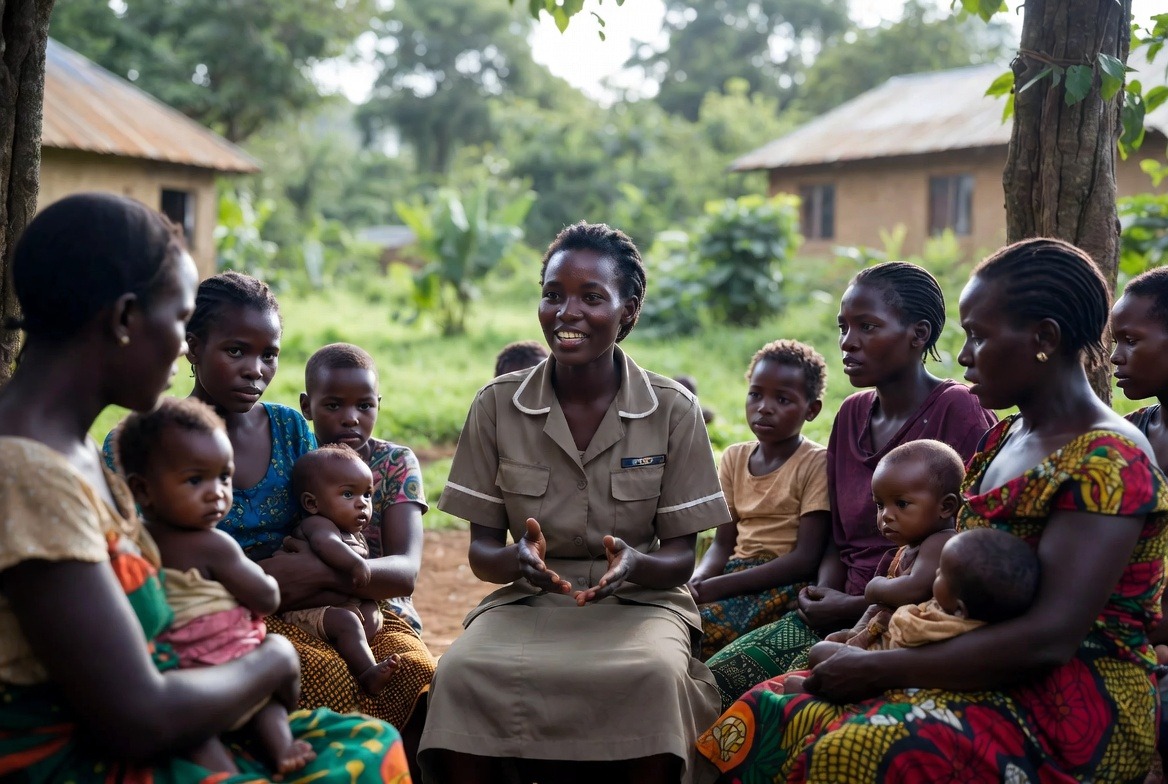
Across Kenya’s villages, informal settlements, and remote communities, a quiet transformation is taking place. For years, community health workers operated largely as volunteers — walking long distances, checking on expectant mothers, educating families, and responding to health emergencies with little recognition or support.
Today, that role is evolving.
With the government’s push to formalize Community Health Promoters (CHPs), Kenya is strengthening one of the most important pillars of its healthcare system: localized, community-based care. These frontline workers are no longer viewed simply as volunteers. They are becoming recognized health actors, data collectors, educators, and trusted connectors between communities and formal healthcare institutions.
At a time when healthcare systems worldwide are under pressure, Kenya’s investment in community health promotion is proving that reaching the “last mile” starts with empowering people who already understand the communities they serve.
The Backbone of Rural Healthcare
In many parts of Kenya, the nearest hospital or health center may be several kilometers away. Transportation challenges, poverty, misinformation, and staff shortages often prevent families from accessing timely healthcare.
This is where Community Health Promoters step in.
CHPs work directly within neighborhoods and villages, making healthcare more accessible at the household level. Their responsibilities range from health education and disease prevention to referrals and follow-up care. Most importantly, they bring trust — something that large institutions alone cannot easily build.
For mothers and young children, that trust can be lifesaving.
Supporting Maternal Health at the Community Level
Maternal health remains one of the most critical areas where CHPs are making measurable impact.
In many rural communities, expectant mothers still face barriers such as delayed antenatal visits, home deliveries without skilled assistance, poor nutrition, and limited postnatal care. Community Health Promoters help bridge these gaps through regular household visits and personalized support.
A CHP may spend part of the morning checking on pregnant mothers, reminding them about antenatal clinic appointments, monitoring warning signs, and educating families about safe delivery practices.
For first-time mothers especially, having a familiar and trusted health promoter nearby often encourages earlier engagement with healthcare services.
CHPs also play an important role after childbirth. They monitor newborn health, educate mothers on breastfeeding and nutrition, and ensure babies receive timely immunizations.
This localized follow-up significantly improves the chances of early detection when complications arise.
Improving Childhood Immunization Coverage
One of the clearest successes of Kenya’s community health strategy has been increased awareness around childhood immunization.
Missed vaccinations are often not caused by refusal alone. In many communities, families simply lack information, transportation, or reminders about immunization schedules.
Community Health Promoters help solve this challenge through direct engagement.
By maintaining household records and conducting routine follow-ups, CHPs can identify children who may have missed vaccines and encourage caregivers to visit nearby health facilities. In some regions, they also assist during outreach vaccination campaigns and public health drives.
Their familiarity with local languages, traditions, and family structures allows them to communicate health information in ways that are practical and culturally understood.
The result is stronger immunization coverage and better protection against preventable diseases.
Digital Tools Are Changing Community Healthcare
The work of Community Health Promoters is increasingly being strengthened by digital technology.
Kenya’s rollout of electronic Community Health Information Systems (eCHIS) is helping transform how health data is collected and used at the grassroots level. Instead of relying entirely on paper records, many CHPs now use mobile devices to register households, track patient information, record pregnancies, monitor chronic illnesses, and report health trends in real-time.
This shift has several important benefits.
First, it improves accuracy and reduces delays in reporting. Health facilities and county officials can access updated community-level information much faster than before.
Second, digital systems help identify emerging health risks earlier. If a community begins reporting unusual disease symptoms or declining immunization attendance, health teams can respond more quickly.
Third, eCHIS allows healthcare planning to become more data-driven. Governments and development partners can better understand which regions require additional resources, staffing, or interventions.
For frontline workers themselves, digital tools also reduce paperwork and make follow-up care more organized and efficient.
A Day in the Life of a Community Health Promoter
At sunrise in a rural Kenyan village, a Community Health Promoter begins the day with a notebook, a mobile device, and a long list of households to visit.
The first stop may be an elderly patient managing hypertension. The next visit could involve checking on a pregnant mother in her third trimester. Later in the day, the CHP may assist a family whose child missed a vaccination appointment or educate residents about sanitation and malaria prevention.
Between visits, health data is updated digitally through eCHIS, referrals are submitted to nearby clinics, and emergency concerns are escalated to healthcare professionals.
The work is demanding. It requires patience, resilience, and deep community relationships.
But for many families, the CHP is the first and most reliable point of contact within the healthcare system.
In communities where healthcare access is limited, these promoters are not just health workers — they are advocates, educators, counselors, and problem-solvers.
Why Formalization Matters
The government’s decision to formalize Community Health Promoters represents more than administrative reform. It is recognition that community health systems are essential to national healthcare delivery.
Formalization can improve training, provide structured compensation, strengthen accountability, and create better integration between county health systems and community-level services.
For development partners and donors, investing in CHPs offers high-impact returns. Community-based prevention is often more cost-effective than treating advanced illness later in hospitals.
For government stakeholders, stronger community health systems reduce pressure on overstretched facilities while improving national health outcomes.
And for communities themselves, it means healthcare becomes more personal, accessible, and proactive.
Reaching the Last Mile
Healthcare transformation does not begin in boardrooms or major hospitals alone. It begins in homes, villages, marketplaces, and communities where trusted individuals help families make informed health decisions every day.
Kenya’s Community Health Promoters are proving that localized care is one of the most effective ways to strengthen public health systems and reach underserved populations.
As the country continues to modernize healthcare delivery, these frontline workers remain at the center of progress — connecting policy to people, data to action, and healthcare services to the families who need them most.
From volunteers to promoters, their role is no longer invisible.
It is foundational to the future of healthcare in Kenya.