

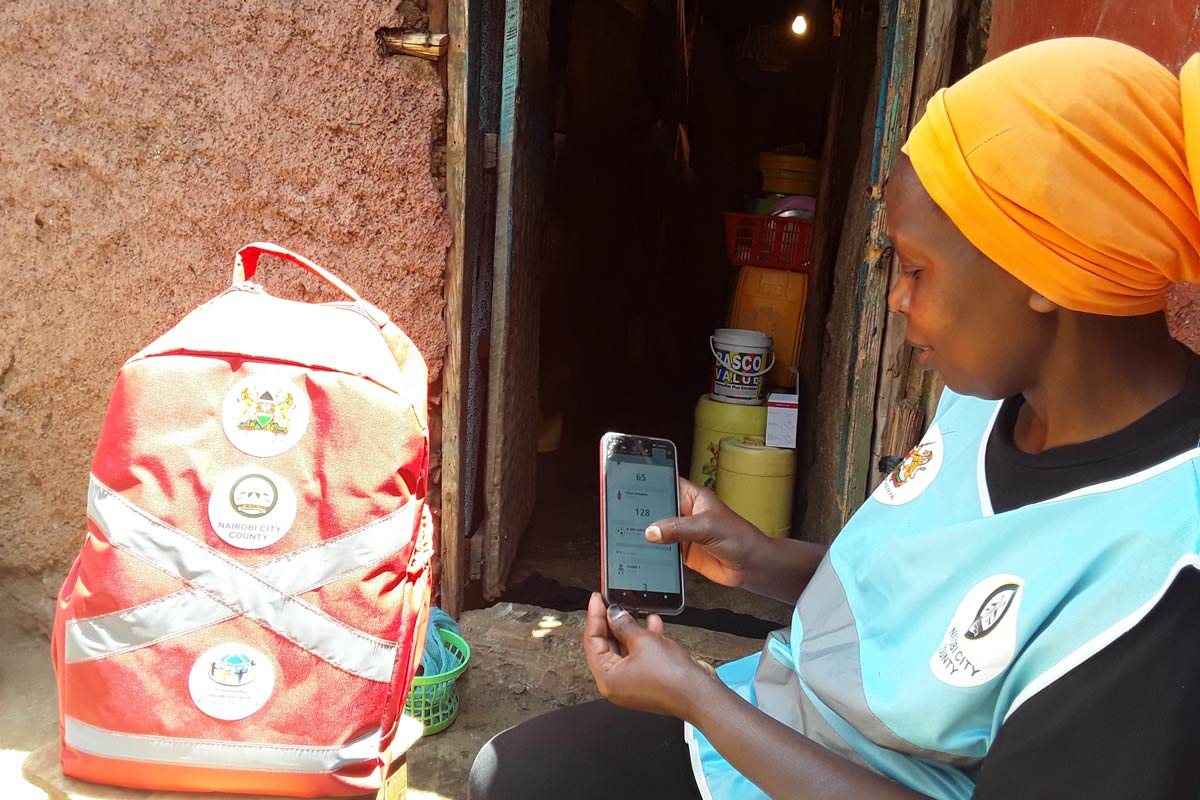
 Kenya has trained over 100,000 Community Health Promoters (CHPs) and equipped them with digital tools. The shift from curative to preventive care is no longer a policy ambition – it is happening, household by household.
━━━━━━━━━━━━━━━━━━━━━━━━━━━━━━━━━━━━━━━━━━━━━━━━━━━━━━━
KEY STATS (for callout boxes):
100,000+ – CHPs trained and deployed nationally (2025 target: 107,000)~15,000 – Annual lives that could be saved with full CHP coverage (MoH estimate)
4.2M – Households reached through home-based care (2025)
85% – CHP coverage of target households (up from 45% pre-2024)
1:1:50 – Ratio of CHPs to villages to households (national standard)
━━━━━━━━━━━━━━━━━━━━━━━━━━━━━━━━━━━━━━━━━━━━━━━━━━━━━━━
Imagine two Kenyan mothers.
Mother A (2019): Her child develops a persistent cough and mild fever. The nearest health centre is 12 kilometres away. Transport costs 500 KES round trip. She waits three hours to be seen. The nurse suspects pneumonia and prescribes antibiotics. By the time she returns home, she has spent 1,200 KES and an entire day. The child recovers – but that 1,200 KES was her weekly vegetable-selling profit. Rent is now late.
Mother B (2026): Her child develops the same cough. A neighbour – trained, salaried, and equipped with a tablet – visits the next morning. The CHP performs an oxygen saturation test, checks the child’s vaccination status, and logs the symptoms into the eCHIS system. An algorithm flags possible pneumonia. The CHP provides oral antibiotics carried in her kit and refers the mother to the local dispensary for a follow-up. Total cost to the family: 100 KES for the drugs. Time lost: 30 minutes. Rent is paid on time.
This is the difference between curative healthcare and true primary healthcare. And it is why Kenya’s investment in Community Health Promoters (CHPs) is arguably the most consequential health policy decision of the decade.
THE PROBLEM: WHY HOSPITALS CANNOT DO IT ALONE
Kenya’s public health system has long been structured like an inverted pyramid: the most resources flow to the top (tertiary hospitals like Kenyatta National, Moi Teaching & Referral), while the base – community-level prevention – remains chronically underfunded.
The result, pre-2024:
- 70% of outpatient visits were for conditions preventable through basic hygiene, nutrition, or vaccination (MoH data)
- 45% of counties had no functional community health structure
- Catastrophic health expenditure pushed approximately 1 million Kenyans into poverty annually
Hospitals are essential. But a system that waits for people to fall sick before intervening is neither financially sustainable nor ethically defensible.
THE SOLUTION: CHPS AS THE NEW FRONT DOOR OF UHC
The 2024-2025 rollout of the national CHP programme changed the architecture of care. For the first time, Kenya has a standardised, salaried, and digitally-equipped community health workforce operating at scale.
What CHPs actually do (not just rhetoric):
- Home-based screening for hypertension, diabetes, and malnutrition
- Vaccination tracking and defaulter follow-up
- Prenatal and postnatal support (including birth preparedness counselling)
- Water, sanitation, and hygiene (WASH) education
- Mental health first aid (a newly added module for 2025)
- Referral coordination to ensure patients actually reach facilities
Each CHP is assigned approximately 50 households in their own village. They are not strangers with clipboards. They are neighbours – which means trust is already embedded.
QUOTE“You cannot Uber Eats your way to Universal Health Coverage. Prevention happens in kitchens, not operating theatres. The CHP is the only scalable mechanism to deliver preventive care at the necessary density.”
DIGITISING THE LAST MILE: THE eCHIS REVOLUTION
The headline innovation is not the CHP themselves – community health workers have existed in Kenya in various forms for two decades. The revolution is the Electronic Community Health Information System (eCHIS) and the government-issued tablets in every CHP’s hands.
Before eCHIS, community health data was collected on paper forms, stored in county offices, and summarised months later – too late to act on disease outbreaks or supply shortages.
Now, when a CHP enters data on their tablet, three things happen in real time:
| Outbreak detection (e.g., measles cluster) | 3-6 weeks | 24-48 hours |
| Vaccine stock alert at local dispensary | 2-4 weeks | Same day |
| Malnutrition trend identified | 4-8 weeks | Weekly dashboard |
| Defaulting TB patient flagged | 1-2 weeks | Same day |
Real-world use case (2025): In West Pokot, eCHIS data showed a spike in acute malnutrition among children under five across three adjacent villages in January 2025. The county nutrition officer received an automated alert within 48 hours. Supplementary feeding programmes were deployed within a week. Four months of malnutrition drift were compressed into days.
THE ECONOMIC CASE: PREVENTION IS CHEAPER (BY FAR)
Every shilling spent on primary healthcare reduces future hospital spending. But the numbers are striking:
| Intervention | Cost per beneficiary | Avoided cost (hospitalisation) | ROI |
|---|---|---|---|
| CHP home hypertension screening | ~150 KES | ~8,000-12,000 KES (per hospitalisation avoided) | 50-80x |
| CHP vaccination defaulter follow-up | ~200 KES | ~30,000 KES (measles/pneumonia treatment) | 150x |
| CHP prenatal home visit (4 visits) | ~600 KES | ~15,000 KES (birth complication prevention) | 25x |
| CHP diabetes screening + lifestyle counselling | ~300 KES | ~50,000 KES (annual dialysis/amputation costs) | 160x |
Sources: MoH costing study (2024), WHO CHOICE estimates for Kenya
Nationally, the CHP programme costs approximately 4.5 billion KES annually to run (including salaries, tablets, training, and supplies). If fully implemented, the MoH estimates it could reduce avoidable hospital admissions by 25-30% – saving an estimated 15-20 billion KES in tertiary care costs annually.
UHC is not affordable without CHPs. CHPs are not possible without digitisation.
WHAT SUCCESS LOOKS LIKE (AND WHAT IT DOES NOT)
By end of 2026, the government targets:
- 107,000 CHPs deployed (one per 50 households)
- 90% household coverage in all 47 counties
- Fully integrated eCHIS with national health insurer (SHA) claims data
But success is not automatic. Three conditions must hold:
1. Consistent salary payments. CHPs are now salaried (previously volunteer). Any delay – and there have been delays in some counties – erodes morale and coverage. The national Treasury must treat CHP salaries as a protected vote.
2. Tablet maintenance and connectivity. A tablet without software updates, repair pipelines, or network coverage is a brick. Counties need device management budgets, not just procurement budgets.
3. Referral pathways that work. A CHP can identify a hypertensive patient, but if the local dispensary has no medication or the patient cannot afford transport, nothing changes. The entire chain – CHP → dispensary → health centre → hospital – must function.
COMPARING KENYA TO THE REGION
| Country | CHW/CHP coverage | Digital health integration | UHC progress |
|---|---|---|---|
| Kenya (2026) | 100,000+ CHPs, ~85% coverage | eCHIS nationwide | Accelerating |
| Rwanda | ~45,000 CHWs, 100% coverage | RapidSMS (limited clinical data) | High (90% insurance coverage) |
| Ethiopia | ~40,000 Health Extension Workers | Paper-based in rural areas | Moderate |
| Ghana | ~15,000 CHOs (nurse-led) | CHPS+ digital pilot | Moderate |
Kenya now has the largest digitally-enabled community health workforce in Sub-Saharan Africa – larger than Rwanda and Ethiopia combined. That is not a meaningless statistic. It is a foundation.
WHAT’S STILL MISSING (CREDIBILITY SECTION)
No honest assessment ignores the gaps:
- CHP-to-population ratios still exceed targets in high-density informal settlements (one CHP may be responsible for 120+ households in parts of Kibera and Mathare)
- Drug stockouts at the community level remain common (oral rehydration salts, amoxicillin, iron folate)
- Supervision ratios are thin (one CHP supervisor per 50-100 CHPs in some counties)
Male CHPs remain underrepresented (~30% of the workforce, affecting household access in conservative communities)
Acknowledging these gaps is not criticism. It is a roadmap.
A 3-POINT ACTION PLAN FOR STAKEHOLDERS
For national government (MoH, Treasury):
- Protect CHP salaries and device maintenance budgets in annual appropriations
- Integrate eCHIS with SHA claims data to create a closed loop (screening → referral → treatment → reimbursement)
- Expand the CHP curriculum to include mental health, geriatric care, and NCD management (all rising disease burdens)
For county governments:
- Dedicate local revenue (e.g., 2-3% of county health budgets) to CHP supervision and drug resupply
- Establish tablet repair hubs at sub-county level (not every broken device needs to go to Nairobi)
- Publish quarterly CHP performance dashboards (households visited, referrals completed, stock status)
For development partners (WHO, UNICEF, World Bank, NGOs):
- Shift funding from parallel community health projects (often fragmented) into pooled financing for the national CHP programme
- Support last-mile connectivity (off-grid tablet charging solutions, mobile network expansion)
- Fund operational research on CHP effectiveness (what works, what does not)
THE VERDICT
Kenya has built the scaffolding of a genuine primary healthcare system. The CHP programme, combined with eCHIS digitisation, is the most significant structural reform in Kenyan public health since the 2010 Constitution devolved health services.
But scaffolding is not a finished building.
The next 24 months will determine whether this becomes a durable institution – like Kenya’s successful expanded immunisation programme – or another well-intentioned initiative that faded due to fiscal pressure and implementation gaps.
The mothers of Turkana, Kibera, and Kisumu are watching. Their children’s health – and their household budgets – depend on whether Kenya finishes what it started.
QUOTE (CLOSING)“Universal Health Coverage does not begin in a president’s speech or a donor’s cheque. It begins with a CHP knocking on a door, tablet in hand, asking: ‘How is your family today?'”
━━━━━━━━━━━━━━━━━━━━━━━━━━━━━━━━━━━━━━━━━━━━━━━━━━━━━━━
CALL TO ACTION:
For health officials: Is your county hitting the 90% household coverage target? Share your CHP dashboard metrics below.
For CHPs and supervisors: What is working on the ground? What is not? (Pseudonyms welcome – honest feedback helps everyone.)
For investors and donors: Interested in pooling financing for CHP drug supply chains or tablet connectivity? DM for a briefing note.