

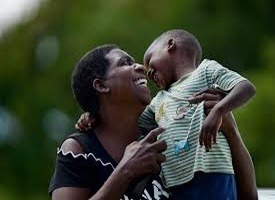
Early childhood development in Kenya is receiving greater attention following the launch of the 2025–26 Kenya Mini Demographic and Health Survey. For the first time, the national survey has assessed how children as young as three months are developing, measuring milestones in movement, language, thinking and social skills.
Kenya has expanded its national health data collection to include how babies and young children develop during their earliest years. The 2025–26 Kenya Mini Demographic and Health Survey (KMDHS) is the first national demographic survey to assess developmental milestones in children as young as three months.
Launched in Nairobi on November 3, 2026, the survey used the World Health Organization’s Global Scales for Early Development tool to assess movement, language, thinking and social skills among young children.
County disparities highlight gaps in child development
Although most children assessed were developmentally on track, the findings reveal significant differences across counties.
Among children aged 3–23 months, the proportion meeting expected developmental milestones ranged from 52 per cent in West Pokot to 97 per cent in Kakamega.
Dr Makeba Shiroya, WHO Kenya’s National Programme Officer for Child and Adolescent Health, said the county-level findings could help policymakers identify where early-childhood interventions are most needed.
The data provides an opportunity for county governments to strengthen programmes that support children’s development, particularly in areas recording lower results.
Survey provides an update on Kenya’s health indicators
The 2025–26 survey is Kenya’s eighth Demographic and Health Survey since 1989 and the country’s first mini survey. It provides an update between the full surveys, which are generally conducted every five years.
Led by the Kenya National Bureau of Statistics (KNBS) in collaboration with the Ministry of Health and other stakeholders, the exercise collected data from 29,935 households between November 5, 2025, and February 10, 2026.
Its findings will help monitor progress towards national health targets, the Sustainable Development Goals and Kenya’s Vision 2030.
The report also records improvements in several health indicators compared with 2022. Under-five mortality declined from 41 deaths per 1,000 live births in 2022 to 37 deaths per 1,000 live births.
Additionally, 91 per cent of births took place in health facilities in 2025, compared with 88 per cent in 2022. The proportion of women who attended at least four antenatal care visits during their most recent pregnancy also increased from 66 to 72 per cent.
Read Also: 21 Children Get Free Cleft-Lip And Palate Surgeries
United Nations agencies support health data collection
The United Nations supported the survey financially and technically through UNICEF, WHO, UNFPA and UN Women.
WHO Representative to Kenya Dr Neema Rusibamayila Kimambo, speaking on behalf of UN Resident Coordinator Dr Gary Conille, said the findings represent the experiences of individuals and families behind the statistics.
She highlighted the importance of decisions that respond to the needs of mothers, children, adolescents and women facing violence.
The UN agencies contributed to survey design, field team training, data analysis and report development.
Dr Ouma Oluga, Principal Secretary for the State Department for Medical Services, said the information should translate into practical improvements in people’s lives rather than simply serve as statistics.
The survey received funding from the Government of Kenya, the Gates Foundation, the Conrad N. Hilton Foundation, Aga Khan University’s Institute for Human Development, UNICEF, UNFPA and WHO. ICF provided technical assistance through the DHS Program.
WHO reaffirmed its commitment to working with the Kenyan government and development partners to strengthen health information systems. The goal is to ensure that evidence on early childhood development in Kenya translates into better policies, targeted interventions and improved health outcomes for families.